We are entering a new phase of the technological era where passwords are disappearing, and a zero-trust approach to digital identity is taking shape.
Traditional systems are being replaced by passkeys and verifiable credentials, which are becoming the foundation of modern digital trust.
While passkeys help us authenticate securely without passwords, verifiable credentials enable identity and trust without revealing unnecessary information for humans, organizations, and even AI agents.
Understanding Digital Identity Today
Digital identity is no longer just about usernames and passwords. It’s about:
- Who you are
- What you can prove
- Whether others can trust that proof instantly
Modern systems need identity solutions that are:
This is where the difference between passkeys and verifiable credentials becomes important.
What Are Passkeys in Digital Identity?
A passkey is a passwordless authentication method based on public-key cryptography. It allows users to sign in using biometrics or secure devices instead of passwords.
Role of Passkeys:
Secure authentication
Protection against phishing
Better user experience
Passkeys are excellent for access control, but they stop at login.
They do not represent identity beyond the platform, and they do not carry trustable claims such as qualifications, licenses, or permissions.
What Are Verifiable Credentials?
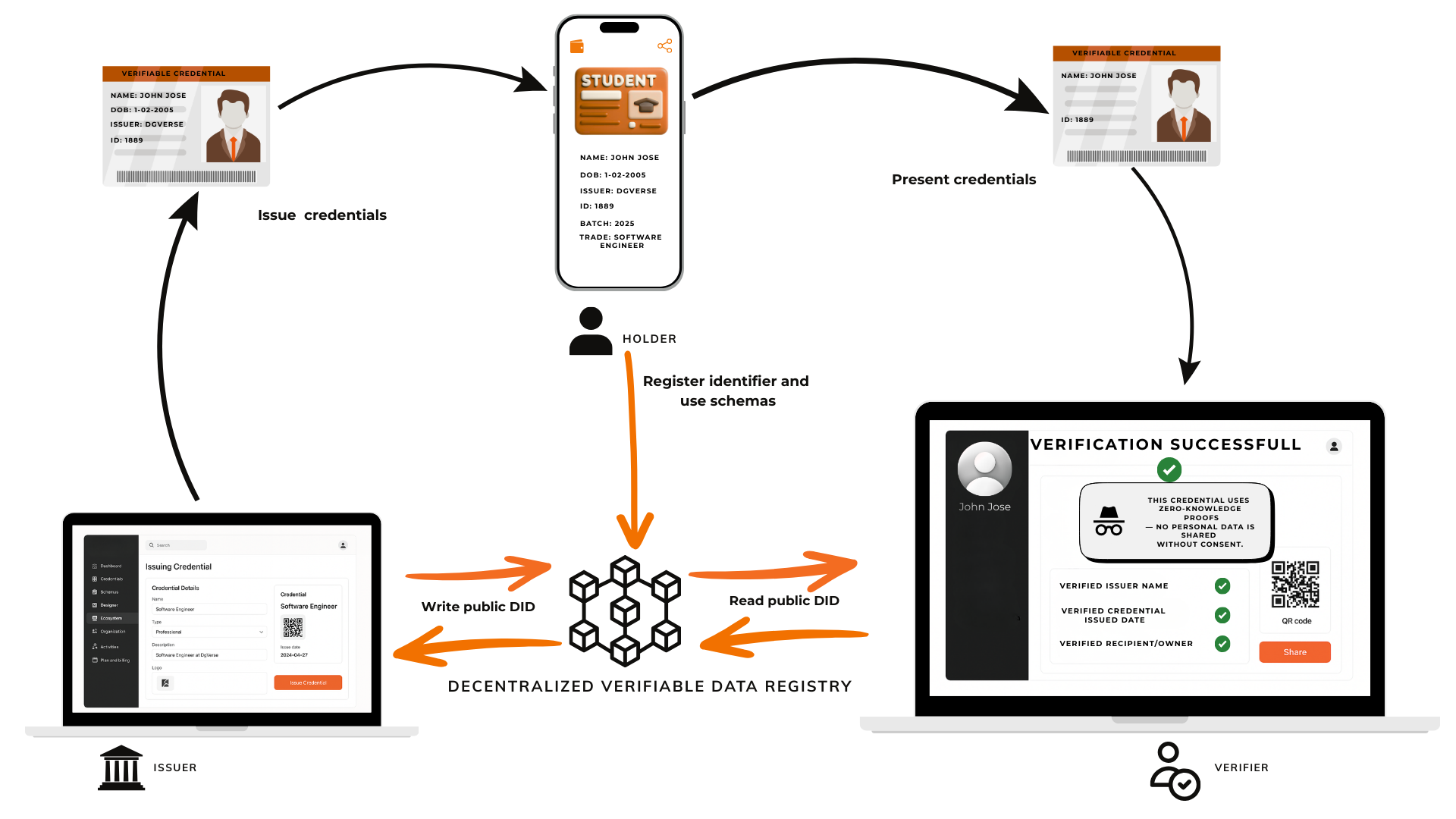
A Verifiable Credential is a digital attestation that can be cryptographically verified to ensure its authenticity and integrity. It contains verified information about a person, organization, or AI agents.
They follow W3C standards and are designed to be:
- Tamper-proof
- Privacy-preserving
- Independently verifiable
Examples of VCs:
- • Educational certificates
- • Professional licenses
- • Employee or partner IDs
- • KYC and compliance credentials
- • Event passes
- • AI agent identities (verifiable AI)
Unlike traditional digital documents, verifiable credentials do not rely on central databases or manual verification.
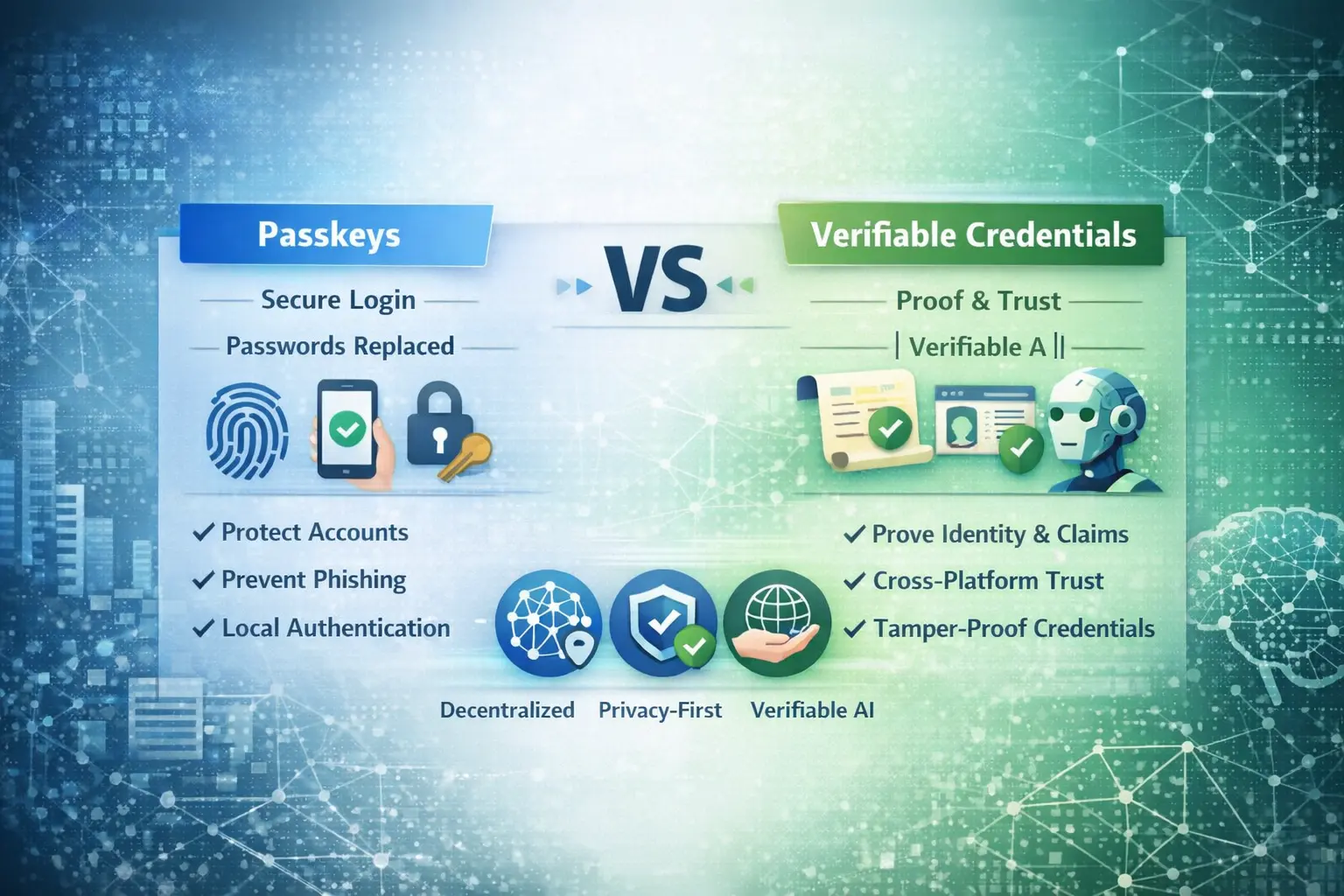
Passkeys vs Verifiable Credentials: Key Differences
Verifiable Credentials and the Future of Trust
1. From Platform Trust to Cryptographic Trust
Traditional systems ask users to trust platforms. Verifiable credentials enable trust through cryptography, where anyone can verify claims independently.
This shift is critical for:
- Cross-platform identity
- Borderless digital services
- Decentralized ecosystems
2. Privacy-First Digital Identity
With rising regulations (GDPR, DPDP, etc.), organizations want less data storage, lower liability, and stronger user consent.
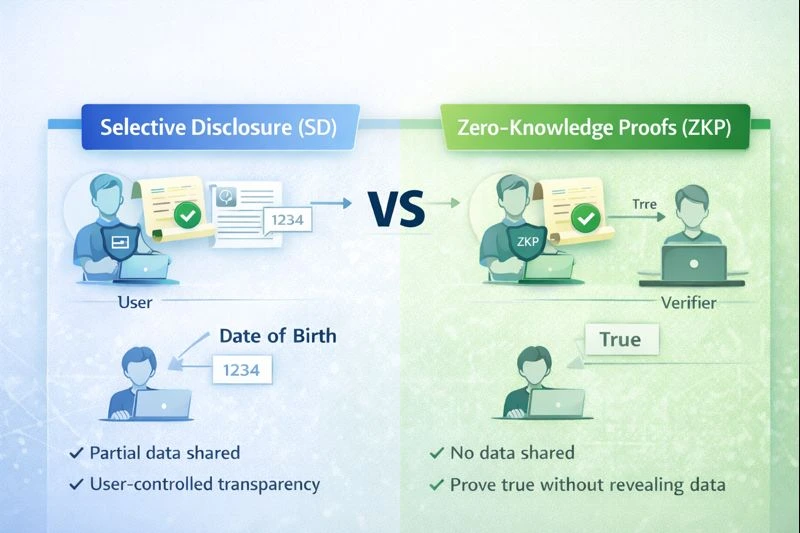
Verifiable credentials enable selective disclosure, meaning users share only what’s required — nothing more.
3. Verifiable AI
As AI agents act autonomously — making decisions, executing transactions, accessing systems — they need identity and accountability.
Verifiable AI identities allow:
- AI agents to prove who deployed them
- Verification of permissions and scope
- Trust between humans, systems, and machines
4. Reducing Fraud and Manual Verification
Fake certificates, forged documents, and manual checks slow down businesses and increase risk.
Verifiable credentials:
- Eliminate document fraud
- Enable instant verification
- Reduce operational costs
- Improve user experience
How Passkeys and Verifiable Credentials Work Together
This is not a replacement story — it’s a stack.
Passkeys
Secure Login
Verifiable Credentials
Trust, Proof, Authorization
A future-ready digital identity system uses both:
1. Passkeys for authentication2. Verifiable credentials for trust, verification and authorization
The Future of Digital Identity Is Verifiable
As the internet evolves toward AI-driven systems, decentralized platforms, and cross-border digital services, the future of digital identity will be:
Verifiable credentials are no longer optional infrastructure — they are becoming core to how trust works online.
Why DgVerse
DgVerse helps organizations issue, manage, and verify high-value verifiable credentials at scale. With DgVerse, you can:
Whether you’re building digital identity systems, verifiable AI solutions, or next-generation trust infrastructure, DgVerse provides the foundation.
👉 Build trust that can be verified — not just claimed.
Talk to us about Digital Identity